Widowhood
Die, My LoveWidowhood in the narrative is not simply the legal or social status that follows a husband’s death. It is a condition in which the dead continue to occupy the survivor’s body, house, routines, sleep, and expectations, while the living world insists that she resume ordinary behavior. The Mother-in-Law’s experience gives this state its clearest form: grief begins as intimate disorientation, becomes a repetition of domestic gestures, and is later covered by the public performance of being an ordinary widow who goes out, eats pastries, and takes part in family life.
Definition and Immediate Experience
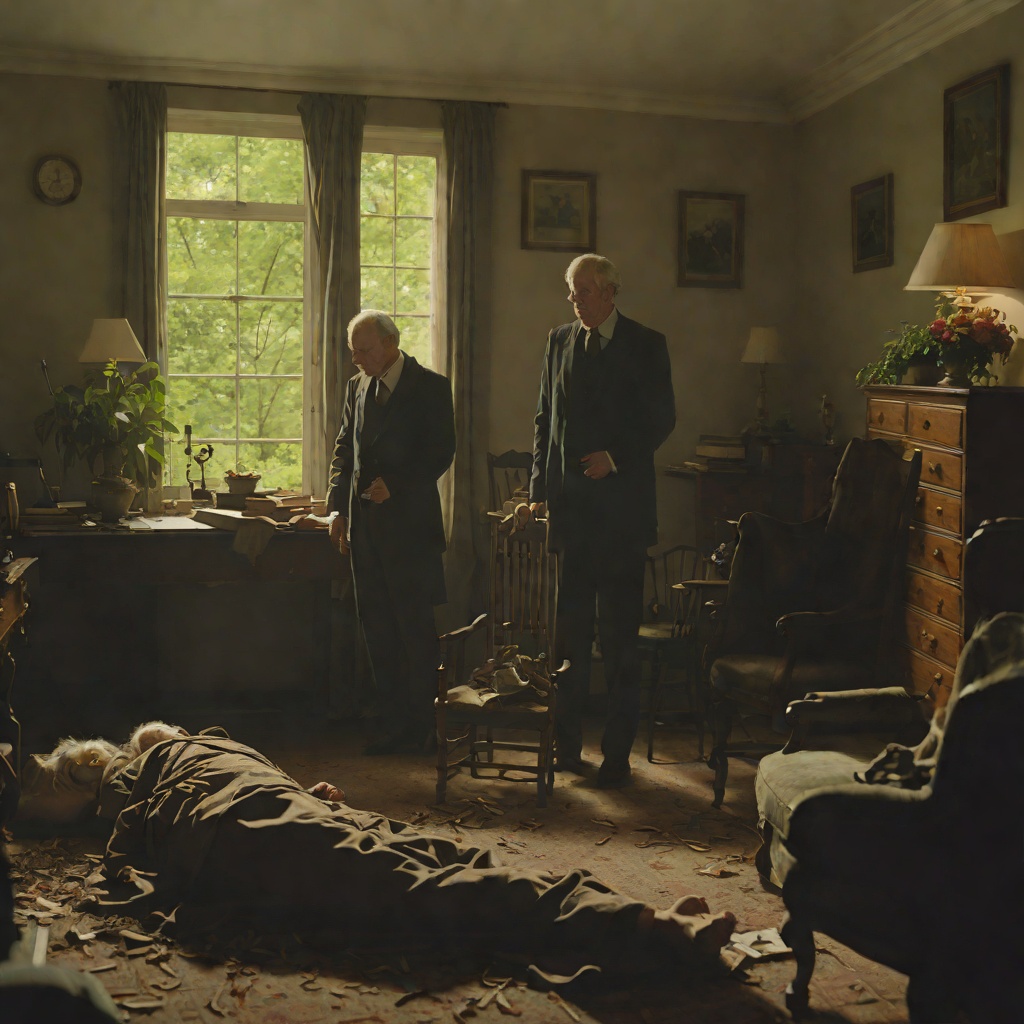
The Mother-in-Law’s widowhood begins in the aftermath of the Father-in-Law’s death, when the house remains crowded with objects that preserve his presence. His spectacles, rocking chair, socks, bedpan, clothing, books, pipe, shaving cream, and other personal effects are not neutral possessions; each points back toward the habits that made him perceptibly alive. The absence of his breathing, morning breath, chewing noises, and bodily marks becomes as important as the objects themselves. Widowhood therefore appears as an encounter with an absence that is materially everywhere but impossible to touch.
The survivor’s body registers this contradiction. The Mother-in-Law is imagined covering her mouth, clinging to the Father-in-Law’s bedpan, gasping after closing a door or skylight, and struggling through the house in slow motion. She tells the family that he squeezed her hand just before dying, while the doctor explains that the movement was only a reflex. That distinction does not settle the matter for her. Instead, it marks the gap between medical explanation and emotional meaning: the gesture may be physiologically involuntary, yet it becomes one of the last signs through which she continues to relate to him. The Narrator feels close to the Mother-in-Law for the first time at precisely this point, recognizing grief as a shared, embodied vulnerability rather than as a formal family role.
Domestic Repetition and Suspended Time
Widowhood is repeatedly expressed through the continuation of tasks that no longer have their former purpose. The Mother-in-Law keeps washing the Father-in-Law’s trousers after he is gone, cooks for two, changes the pillowcases, and mends underwear torn at the crotch. Her house, a solid concrete block overlooking dry pasture and cornfields beyond vegetable gardens, becomes a site where mourning is enacted through maintenance. The surrounding environment is damaged as well: the paved path is dirty, the air is tainted by carcinogenic smoke from burning copper cables, and the Mole tunnels turn the land into a minefield. The external landscape thus echoes a domestic world in which ordinary order has become hostile and unstable.
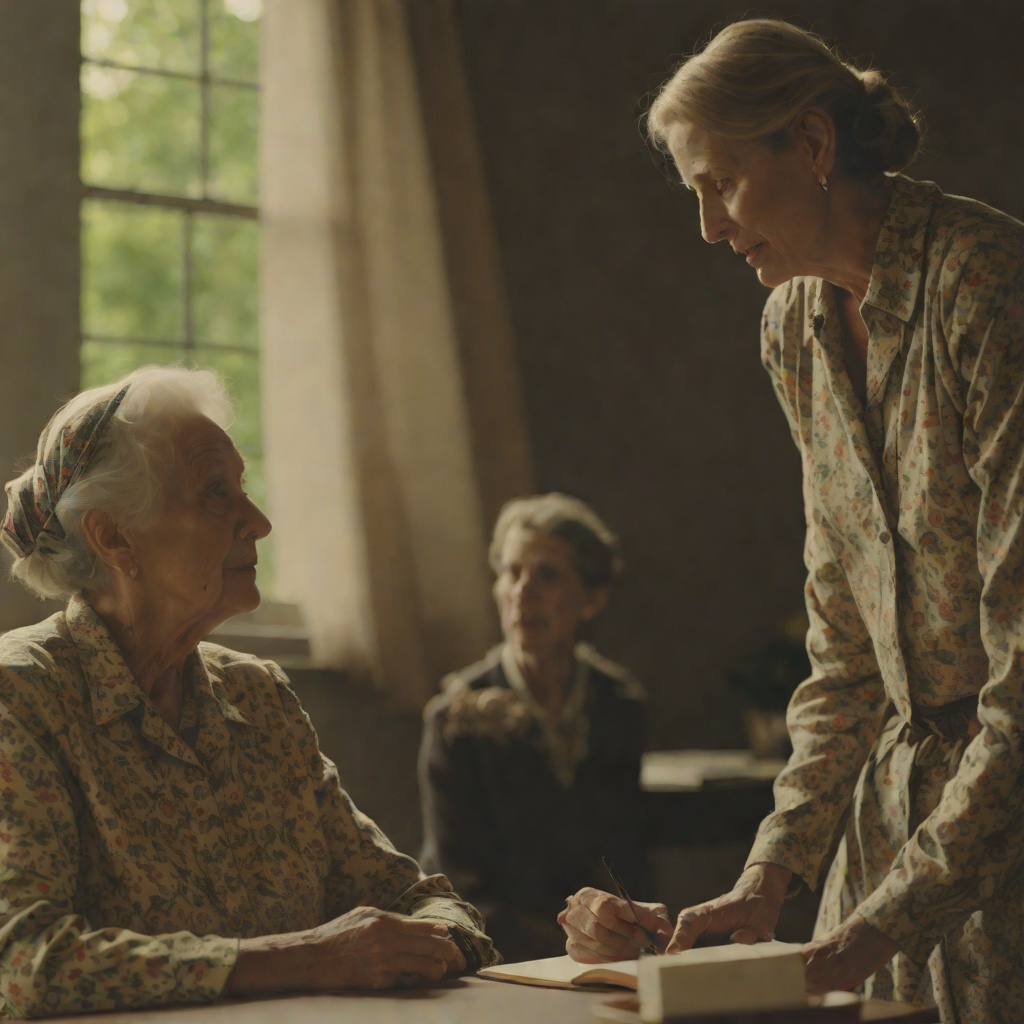
Her grief also interrupts the ordinary sequence of time. She describes sleep as the only moment of peace, when the spirit scatters, yet she cannot sleep reliably and begins to sleepwalk. She wanders through the village in a nightdress shouting about fire, uses a shoe as a telephone to converse with God, and vacuums at four in the morning. Her breakfast is white bread left in the kitchen for days; she ignores the expiry date on the medication begun on the day of the funeral, fails to drive away flies or remove their eggs from homemade chestnut jam, and watches her own fingers carry bread to her mouth as though they belonged to another person. These details make widowhood a failure of automatic self-care: familiar actions continue, but the consciousness that once organized them has become estranged from the body.
The narrative names this temporal condition as a perpetual limbo for the person left behind. The phrase is made concrete through the image of a wet shirt clinging to the body, something clammy that cannot be removed. The Father-in-Law was not portrayed as a tender or sexually attentive companion; he did not spend long afternoons or summers joined to his wife, and he did not consider whether she became aroused. Yet his death still removes the person around whom her entire daily existence had been arranged. The text refuses to measure loss only by the quality of a marriage. Companionship, habit, dependence, and bodily memory can survive even an emotionally hollow union.
From Mourning to Social Performance
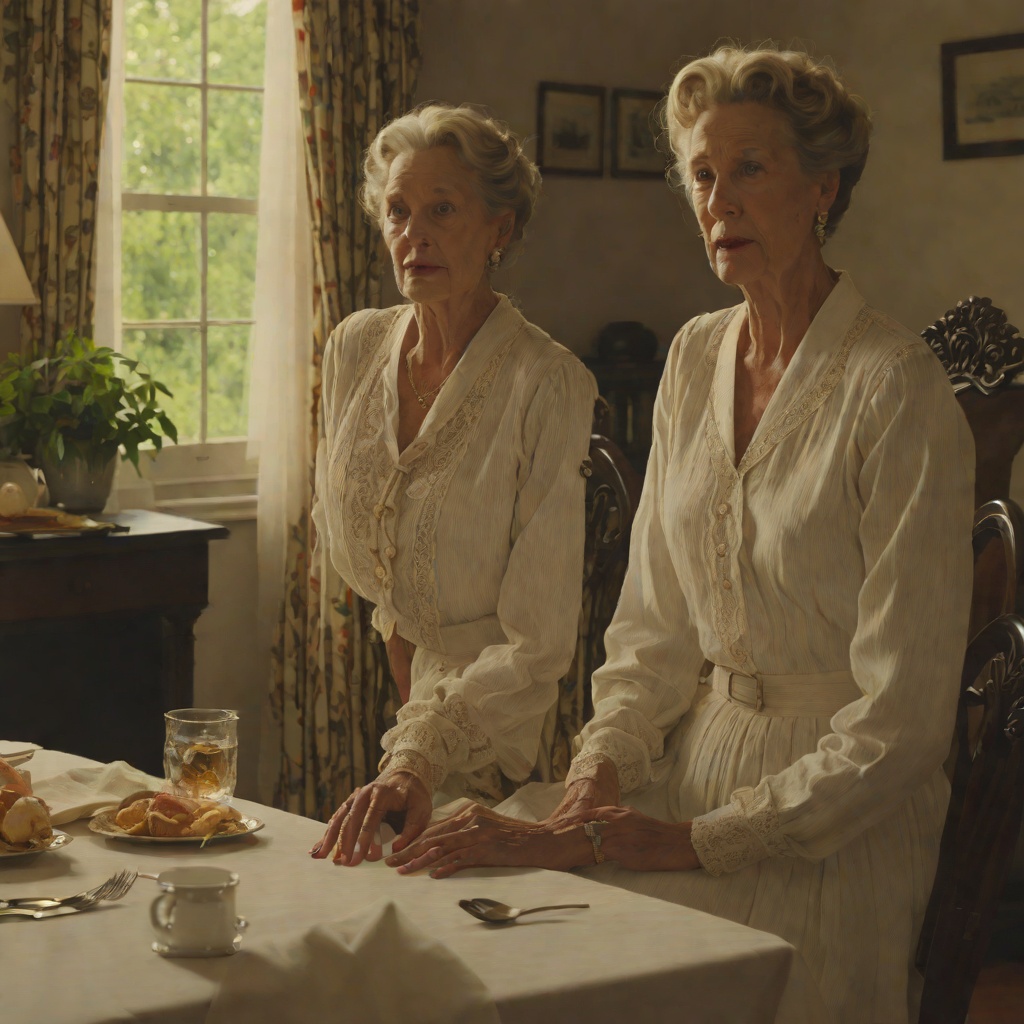
Later, the Mother-in-Law is described as no longer mourning and behaving like any other widow. The apparent recovery is defined through modest public signs: she sits at tables in modern-looking cafes, eats pastries, cuts her nails again, sleeps through the night without reaching for the dead man’s body, and manages breakfast without sobbing into milky coffee. These changes suggest progress, but they also reveal widowhood as a role whose acceptable version is socially recognizable. The family can identify her as a widow who has resumed life because her gestures once again fit public expectations.
This social restoration is enacted during the Sunday outing. The Mother-in-Law waits in the car, asks where the family should go, and presses for movement rather than silence. Possible destinations include aperitifs and chips by the river, the city bell tower, a country fair, or coffee near a market that smells of roasting meat. The family is expected to appear enthusiastic, take the child everywhere, buy balloons, put him on a merry-go-round, and photograph him so that he can be given a childhood. The outing converts private mourning into a family obligation: one must demonstrate enjoyment, mobility, and normality.
The drive across the suspension bridge intensifies that pressure. Below the bridge are sand dunes, families in folding beach chairs, grandparents visiting children and grandchildren, pregnant women hiding cigarettes, and a recovering heroin addict. The scene gathers many socially legible versions of family life and rehabilitation, making the family’s own performance appear merely one more public tableau. The car is parked on a slope with the handbrake engaged and the gear left in first so that it will not roll beneath the bridge. Even this practical precaution carries an undertone of danger, as the family stages an ordinary sunset outing beside a structure associated with height, movement, and possible descent.
Narrative Form and Significance
Widowhood is narrated through a tension between external observation and inward distortion. The Mother-in-Law’s state is not reduced to a neat psychological explanation; it is assembled from objects, bodily reactions, domestic repetitions, sleepwalking episodes, and public routines. The effect is a form of defamiliarization: actions that would normally pass unnoticed—washing trousers, eating breakfast, changing pillowcases, cutting nails—become strange once their absent counterpart is understood. The familiar household is made perceptible again as a system organized around someone who is no longer there.
The narrative also places the Mother-in-Law’s experience beside the Narrator’s own unstable relation to family life. During the outing, the Narrator holds the child with one hand and a scraper with the other, prepares food while stabbing herself with the other hand, and resists the demand to participate in the cheerful Sunday routine. This contrast does not make the Mother-in-Law’s widowhood a simple model of grief; it shows how different crises coexist within the same family. One woman is trying to survive the dead man’s continued presence, while another is unable to inhabit the normal family performance expected of the living.
At the end of the Narrator’s separation from the Husband, grief is compared to a widow unlocking her front door for the first time, eating dinner in silence for the first time, and entering bed alone for the first time. The comparison extends widowhood beyond literal bereavement. Separation produces a related condition of repeated firsts, in which familiar spaces become newly occupied by absence. Yet the resulting sadness is also described as exhilarating and wild. Widowhood consequently becomes a complicated figure for the narrative’s larger understanding of loss: it is pain, but also the first sensation of a life no longer governed by the person who has disappeared.